Vision at the edge: processing images where they are captured
Why low-power machine vision belongs on the device, and what that means for privacy, latency and isolated environments.
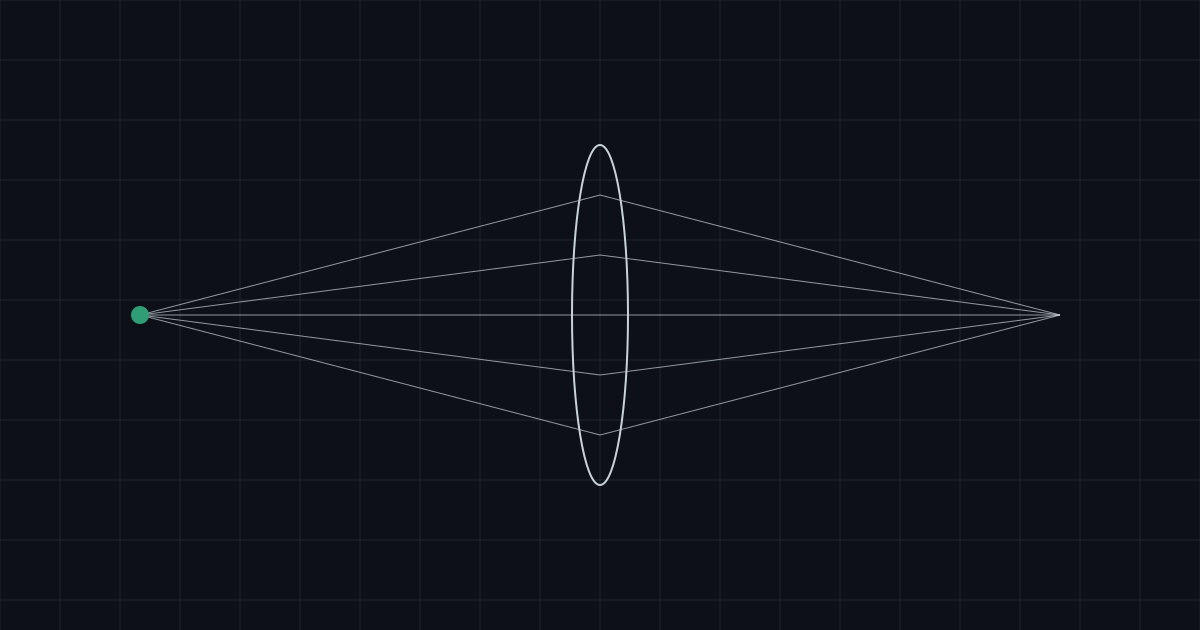
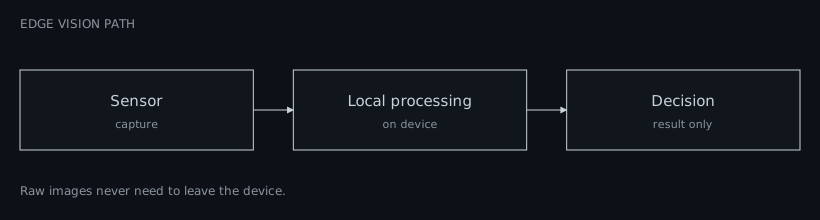
A camera is a sensor, not a network client. The moment its raw output has to travel to a server for interpretation, three things happen: privacy is lost, latency appears, and the system gains a dependency on connectivity. Edge vision removes all three by interpreting the image on the device that captured it.
What stays local
Only the result of the analysis, and only when needed, leaves the device. The raw image does not.
| Property | Server-side vision | Edge vision |
|---|---|---|
| Raw images leave the device | Yes | No |
| Works without a network | No | Yes |
| Round-trip latency | Network-dependent | None |
| Usable in air-gapped zones | No | Yes |
Why low power matters
On-device processing is only practical when the whole chain, from optics and sensor to processing, is designed around an energy budget. Compact, efficient sensor and camera systems make autonomous verification possible on hardware that can run in the field, in sealed housings, without constant supply.
Optics are part of the system
Verification quality is decided long before the software sees a pixel. Optics, sensor characteristics and signal integrity determine what the processing stage can trust, which is why optics and electronics have to be designed together.